fossilesque@mander.xyzM to Science Memes@mander.xyzEnglish · 1 year agoGottem. :)mander.xyzimagemessage-square147linkfedilinkarrow-up11.03Karrow-down120
arrow-up11.01Karrow-down1imageGottem. :)mander.xyzfossilesque@mander.xyzM to Science Memes@mander.xyzEnglish · 1 year agomessage-square147linkfedilink
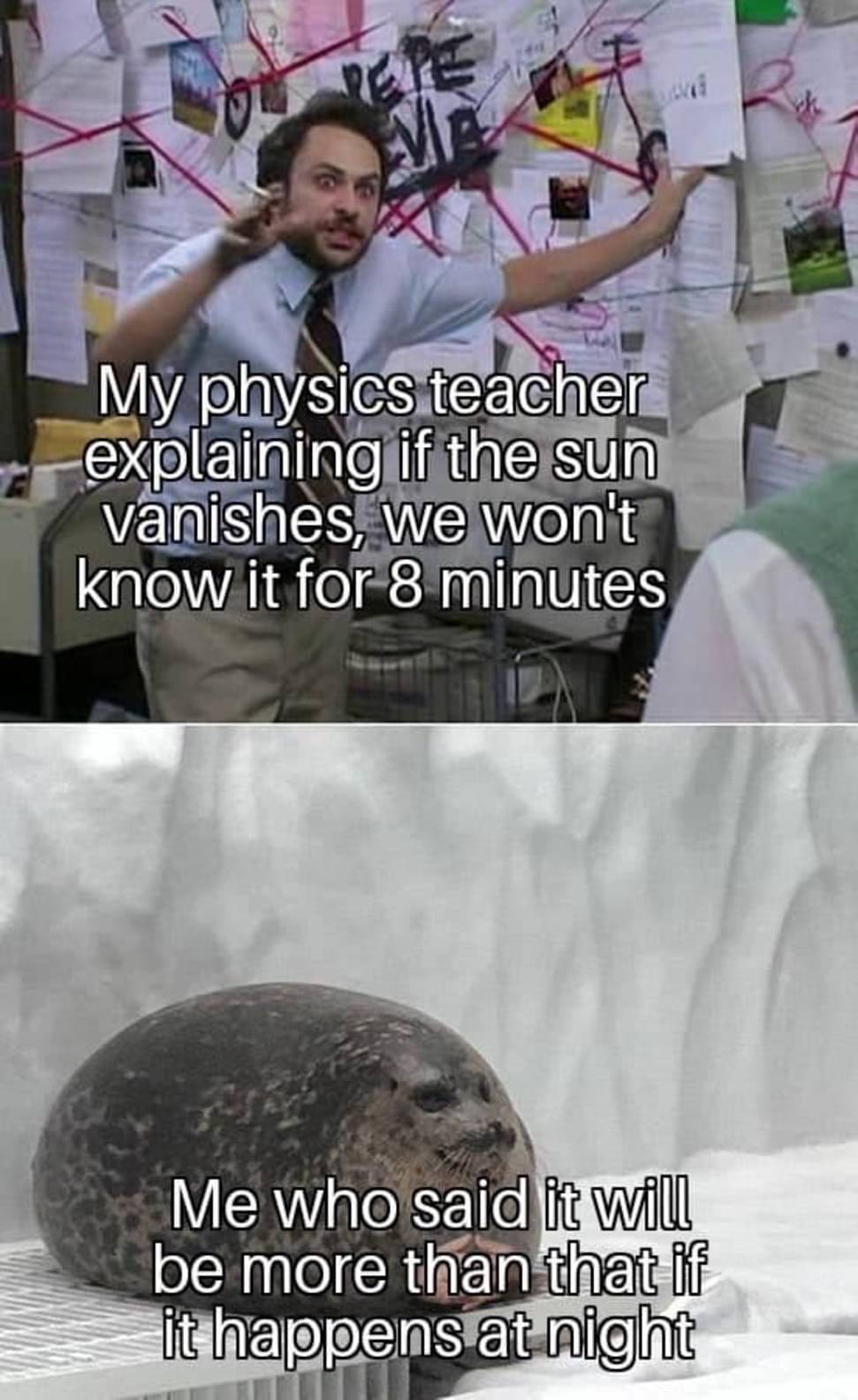
minus-squareLovable Sidekick@lemmy.worldlinkfedilinkEnglisharrow-up4·1 year agoGood one! If the moon wasn’t visible at the time and you were just sitting outside say at midnight, I wonder if you would notice anything different.
minus-squareChapulinColorado@lemmy.worldlinkfedilinkEnglisharrow-up3arrow-down1·1 year agoIt would turn pitch black. So dark the stars far away would be the brightest when compared to everything else. It would be scary.
minus-squareLovable Sidekick@lemmy.worldlinkfedilinkEnglisharrow-up7arrow-down1·1 year agoAccording to astronomers the sun doesn’t have a measurable effect on the night sky when it’s more than 18 degrees below the horizon. So I doubt naked-eye observers would notice.
minus-squareKlear@lemmy.worldlinkfedilinkEnglisharrow-up9·1 year agoCertainly not with all the light pollution.


Good one! If the moon wasn’t visible at the time and you were just sitting outside say at midnight, I wonder if you would notice anything different.
It would turn pitch black. So dark the stars far away would be the brightest when compared to everything else. It would be scary.
According to astronomers the sun doesn’t have a measurable effect on the night sky when it’s more than 18 degrees below the horizon. So I doubt naked-eye observers would notice.
Certainly not with all the light pollution.