

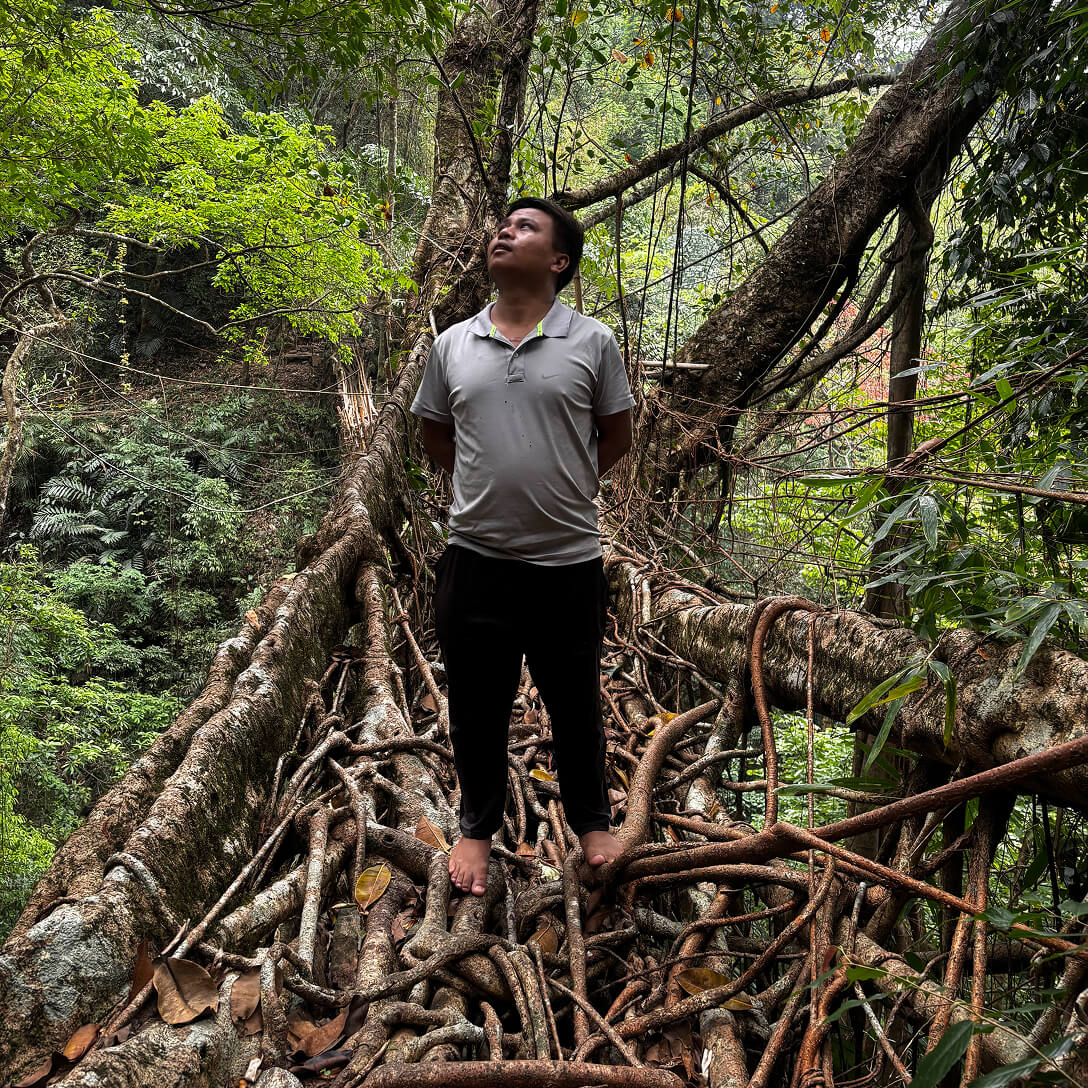
As India nears its 100th year of independence, plans for highways, smart cities, and bullet trains dominate its future narrative. But in the hills of Meghalaya, another blueprint persists—one built not on concrete, but on roots. For generations, the Khasi and Jaiñtia tribes have grown bridges, not built them—living structures coaxed from rubber fig trees, shaped by hand over decades, passed down like heirlooms. But that inheritance is at risk. Tourism moves faster than the roots. Policy arrives from the top down. And the knowledge—passed barefoot through forests, from uncle to nephew—is fading.
Morningstar Khongthaw, a 29-year-old Khasi conservationist, is trying to hold the line. His story isn’t just about preserving tradition. It’s about whether we still know how to grow anything that lasts.
“Root bridges are perhaps one of the most elegant examples of ecological intelligence and cultural heritage intertwined,” says Sameer Shisodia, CEO of Rainmatter Foundation, which supports community-led conservation projects across India. “Morningstar’s careful approach shows us that meaningful innovation often lies in quietly enhancing traditions rather than forcing external solutions.”
“A single tree is a forest,” Morningstar said. “Imagine if we had more.” He sees the Ficus not just as a structure, but as an anchor and climate shield. “They help the water table, prevent landslides. Even a lone Ficus supports life—birds, squirrels, insects, people.”
Putting the focus on a lesser known art form. The beauty that comes from necessity is breathtaking in these bridges. It makes me wonder if I could coax roots to grow in unique shapes.