

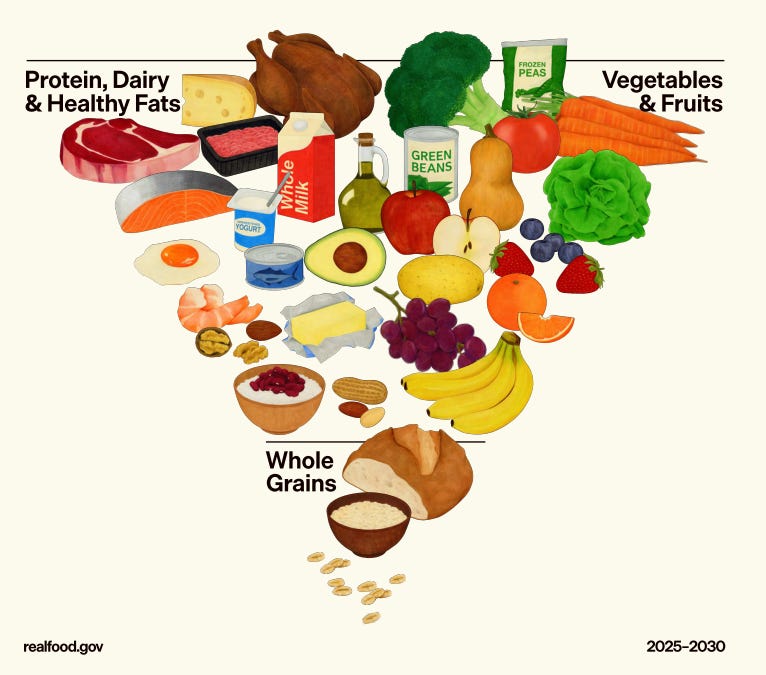
Nina Teicholz discusses the new American Dietary Guidelines.
Summary
The article “Butter Is Not Back: The Broken Promise on Saturated Fats” critiques the updated U.S. Dietary Guidelines, highlighting a major contradiction between new food recommendations and restrictive nutrient caps.
The key points of the article include:
The Saturated Fat Conflict: Despite initial promises to move away from strict limits on saturated fats, the guidelines retain a 10% calorie cap. This creates a paradox, as the updated food pyramid now encourages cooking with butter and tallow and features red meat prominently.
Impact on Federal Programs: The author notes that while average consumers might ignore the cap, vulnerable populations relying on federal food programs must adhere to it strictly, making it nearly impossible for them to consume the newly encouraged foods.
Positive Changes: The article acknowledges some progress, such as a dramatic reduction in sugar limits and the recognition of low-carbohydrate diets as a viable option for managing certain health conditions.
Scientific vs. Political Influence: The author expresses disappointment that the saturated fat cap remains despite what they describe as evolving scientific evidence supporting its safety. The reversal is attributed to political considerations rather than a lack of scientific consensus.
The author’s core thesis is that saturated fat / butter isn’t actually unhealthy
See France.
America is so focused on diet when the real problem is y’all do anything to avoid walking.
I didn’t read the article as primarily about whether or not they’re healthy, it’s about the mismatch between recommending more red meats and such but still capping saturated fat at 10% making the saturated fat rec effectively toothless since you can’t realistically stay below the cap and meet the other recommendations if your protein is mostly red meat.
They go on to explain political reasons why the cap was probably kept.
The author’s personal opinions about saturated fat research certainly come through too though.