
- cross-posted to:
- linuxphones@lemmy.ca
- linuxphones@lemmy.ml
- cross-posted to:
- linuxphones@lemmy.ca
- linuxphones@lemmy.ml
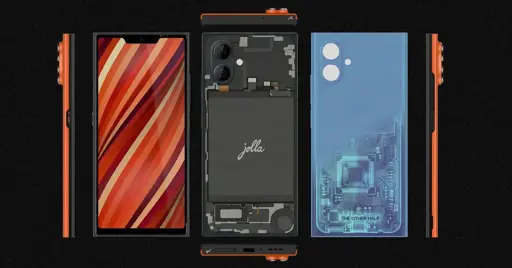
The Finnish company Jolla is back with the Linux-powered Jolla Phone. It’s being positioned as an antidote to the US-dominated smartphone status quo of Android and iOS.
Anyone have experience with these? Specifically looking for how “drop in and replace” it is compared to GrapheneOS.
I’d love to give it a shot, but i worry a bunch of my daily use apps won’t work. I’m working to replace a bunch of the more big tech ones (Spotify, Audible, etc), but would also need to be sure Signal and HomeAssistant work seamlessly.
Jolla has something called AppSupport in their SailfishOS that this phone uses. AppSupport seems to make it possible to run Android apps directly in Linux, without the need of Waydroid. This allows for a more pleasant experience where you don’t have to open Waydroid first before using an Android app. You can access them directly in the SailfishOS app drawer I think.
https://jolla.com/appsupport
You can use android app directly using appsupport: https://jolla.com/appsupport
This still leaves the question of compatibility. Graphene also has issues with some nasty banking apps.
It is the same as grapheneOS: it does not support app using “play integrity API” that are Google specific
Murica ?
Although I did not experience it yet (Unicredit customer), many banks in Europe implement strict Play Integrity requirements.
I see you’re Italian as well. As far as you know, does the Poste app have that problem?
I do not run apps for services that don’t require it.
I use PosteID with SMS verification. And anyway, Italy is going to transition from this messy system to CIE / EUid.
Oh well, at least they seem to offer it. Good news, i’m planning on buying a Linux phone next.
Which Linux phone?
I’ve been running Sailfish for two months now on a secondary device.
There are native clients for both Signal and HomeAssistant. I don’t use HA myself, so I can’t comment on how well Quartermaster works, but I haven’t run into any (major) issues with Whisperfish.
As for general impressions: SailfishOS feels like the best mobile OS … of the year 2013. There are a lot of aspects where it was ahead of the other systems back then. For example with the gesture based navigation. But the other systems have caught up in that regard. And then there are the aspects where Sailfish was perfectly average back then. For example how you grant rights to apps (all requested at once, on first launch) or how the emoji keyboard works (like a different language). Design decisions like that aren’t deal breakers by any means, you can learn to live with them and work around them if necessary, but they give the OS a slightly dated feel.
I have outdated experience. I loved their first generation device back in 2014. It was again a bit expensive compared to its specs, but I loved its UI and multitasking way of working.
Eventually I switched to an Android device mainly because my banking and communication depended on it. Now there are even more tightly coupled. So maybe in the future I’ll go with two devices: one low end Android for official biz that maybe stays in a drawer, and a good Linux phone.
I have the same concern. I bought one as soon as I heard about it just because of the statement and how sick I am of Google. I will use my current device as a fallback for banking apps and the like, that way if I really need it I still have the possibility. Then I hope I can gradually move to Jolla as my main device.
Take this with a grain of salt but there is something called Waydroid (I think?) which you can use to run Android apps on Linux. I’d assume that should work on this phone then. However not sure you need Google Play services, you don’t seem to need them on GrapheneOS so this might work fine?
Waydroid probably is an option but it’s not all that convenient and not unique to Sailfish.