Ah yes, the textile industry, which Marx famously had no association with
He definitely didn’t write hundreds of pages of screed about it, no sir
I made this
But it’s AI
What’s more capitalist than claming credit derived from an environmentally destructive process built on stealing from workers (in this case artist that had their work fed into the plagiarism box)?
To be fair whomever shat out such a shitty corpoart that served as a base for this thing deserve worse than having it stolen.
Lol
not one mention of a bolt of linen in the manifesto. not a one
“The seamstress pays a capitalist $1 for every sweater she makes by herself”
“Why is a capitalist profiting from her labor?”
“I’m gonna tell Grok to make you look like a clown in my AI comic”
The seamstress broke her finger and now must starve
It’s intending to obscure the capitalist relation. The farmer is petty bourgeois (and practically non-existent, agriculture in many countries is extremely proletarianized these days). The loom worker is proletarian, the capitalist A is turning 4 dollars in wool, 1 dollar in tax, and 2 dollars in labor power for 1 dollar in profit. The sewer is also proletarian, the capitalist B turns 8 dollars in raw materials + 1 dollar tax + 2 dollars labor power into 1 dollar in profit.
Capitalist A and B both make 1 dollar in profit per commodity produced, and so redirect that towards expansion of production with the remainder of their money after covering their necessities. Both proletarians along the supply chain had 1 dollar stolen from them per commodity produced in surplus value, and the “Marxist” at the end is a strawman.
Finally, cost of maintaining the tools used and purchasing new ones I am assuming is a part of the “raw materials” category.
I know this is mostly talking about surplus value, but it also really obscures the levers of power here. Generally, the worker doesn’t get some money and then give some to the capitalist unless they’re petty bourgeois. Most often the worker does the work, the money goes to the capitalist, and the capitalist decides which amount to give out to the worker, doing the calculation enough to pay them the least amount necessary.
The capitalist is the one that not only decides what loom or sewing machine to buy, but whether the worker can stay employed, what benefits they get, how long they work and when they get breaks, how to expand the business, they pay the state to help decide who gets taxed and how much and how those taxes are spent, and more.
Yep, well-said! It’s deliberately to make it seem like capitalism is an exclusively voluntary and equal system.
The sewer is also proletarian
Yup, and I hear they’re…grate
Lmao
capitalist (loom) and he claims he took EFFORT to get the AI to spit out this garbage
Yes it is the loom he is paying…
Artisinal market socialism?
Capitalism?
What’s the difference?
“Pay $1 to capitalist” okay now what if you actually paid the entire value of the product to the capitalist and only got paid a wage 1/100th the value of the wool you produce because that’s what actually happens
Even if we play by their numbers, the workers are still getting robbed and the capitalists are still making bank. This is why arguments saying capitalists just need to pay better wages and everything will be alright are wrong.
What a great example of a multi-unserious argument that would take a lot of time and effort to debunk so nobody bothers.
I guess AI is great for making these, it’s like an automated debate perverting/mansplaining machine.
Really, it’s easy to debunk. In short, the parts where the “worker pays the capitalist” are the parts where surplus value is extracted by capitalists A & B, there are many, many more workers per capitalist than the frames imply so this extraction is on a greater scale, and the “Marxist” at the end is a strawman.
But you are Cowbee, the theory wizard. It’s a lot harder for a garden variety marxist like me.
Thank you for being awesome and actually bothering with these.

That’s far too kind, I’m still a novice but I appreciate the flattery! Thank you!
Yeah but if you don’t put it in a comic how am I supposed to understand what you mean by that?
I’m sure one of the many reasons the right keeps forcing AI is because of its potential as a propaganda tool
I like how even in their own construct the worker loses a full third of the value they would’ve taken home to the capitalist
Imagine if every worker got a 33% pay rise tomorrow
According to numbers I made up your analysis is incorrect
Samuelson version 2.0
I don’t see a capitalist doing a lick of work in these images, not sure where this $1 is going. Even in their propaganda it’s like, “I just steal from the fruits of your labor”
You just let em have it. You get yours, the capitalist gets theirs, I get mine. Its so simple you can make it into a 4 panel cartoon. /s
Reminds me of the “Landlords don’t actually make that much profit off of you, it’s actually pretty low amounts really.”
Like, that’s not the point. It doesn’t matter if we’re only being exploited “a little” we’re still being exploited.
The landlord also owns the property, meaning all the money you give them is either profit or paying off a loan and building equity, while for you it’s gone.
Just a little 25% at each stage of production for me. Just a little 25% each transaction. C’mon. I’m doing the most important part. Do you think the seamstress could simply work together with the textile maker? Don’t be silly. 25% for me.
I took effort to make this.

Still more effort than the capitalist is putting into the production chain of each sweater tho
well, the global commodity price for fine wool right now is about $0.15 per 100 Kg [edit: i was off by 100x, see below], and the biggest/thickest sweater will require less than 2 lbs. also, that price is up 50% over last year, so lol, the shepherd is not getting $2 on the $15 sweater even in this “high price” market.
the shepherd are making 10-15 cents on the $190-$250 designer label 100% merino wool sweater that is made in a sweatshop where workers make $1.30/hr to flip out 50 of them in an hour.
Yeah but it’s fine if the shepherd doesn’t get paid the sheep is doing all the work anyway (this comment is a joke)
Ain’t no way wool is $0.15 per 100kg, source?
you’re right, i was doing some conversions because it’s listed in cents (1,538.70 cents per kilo) and fucked myself up. to be fair, tons of ag commodities are crazy cheap.
federal reserve says $15.38/Kg. so $15 for a 100% fine wool thick, designer sweater goes to the shepherd. last year at this time it would be ~$9.84 for the same. wool is weird. makes me want to look up cotton, because i bet its fucked.
cotton is 76.9 ¢ per pound. a shirt is ~0.6 lbs of cotton.
ag material cost / farmer portion of some basic goods:
t-shirt 47¢
jeans $1.15
king size set of jersey sheets $3.84my understanding is that even these costs are higher than what is paid due to the increasing amount of petroleum by products being integrated into clothing and that its difficult to find clothing and household items not made with synthetics.
Very, very interesting data. I’m trying to imagine a pound of cotton, that’s gotta be what, like a fucking pillow size? So absurdly cheap!
Thanks for update <3 still, $15/kg is a steal IMO, literally what, <10% of the final price of a cheap 70€ woolen sweater?
Noob doubt, who is the capitalist here? All of them seem to control their means of production?
I think it’s intending to obscure the capitalist relation. The farmer is petty bourgeois (and practically non-existent, agriculture in many countries is extremely proletarianized these days). The loom worker is proletarian, the capitalist A is turning 4 dollars in wool, 1 dollar in tax, and 2 dollars in labor power for 1 dollar in profit. The sewer is also proletarian, the capitalist B turns 8 dollars in raw materials + 1 dollar tax + 2 dollars labor power into 1 dollar in profit.
Capitalist A and B both make 1 dollar in profit per commodity produced, and so redirect that towards expansion of production with the remainder of their money after covering their necessities. Both proletarians along the supply chain had 1 dollar stolen from them per commodity produced in surplus value, and the “Marxist” at the end is a strawman.
Finally, cost of maintaining the tools used and purchasing new ones I am assuming is a part of the “raw materials” category.
edit: see cowbee.
ⓘ This user is suspected of being a cat. Please report any suspicious behavior.
The farmer is petite bourgeoisie, the other two are proletarian and each have 1 dollar stolen in surplus per commodity created. Capitalists are kept out of frame to obscure that this is happening to many, many workers at the same time for each capitalist, resulting in massive profits (presumably).
Now that I realize the correct interpretation of the image. I’d like to point out that the way the loom and sewer text is written is wrong, the workers do not own the output, they do not pay to the capitalist and keep the rest, the capitalist pays them for their labor and owns the output.
ⓘ This user is suspected of being a cat. Please report any suspicious behavior.
Yep! They are trying to frame surplus value extraction as “workers paying the capitalist,” but the only reason they would pay anyone is if they did not own their instruments of labor. It’s all speech meant to frame a more voluntary arrangement than it really is.
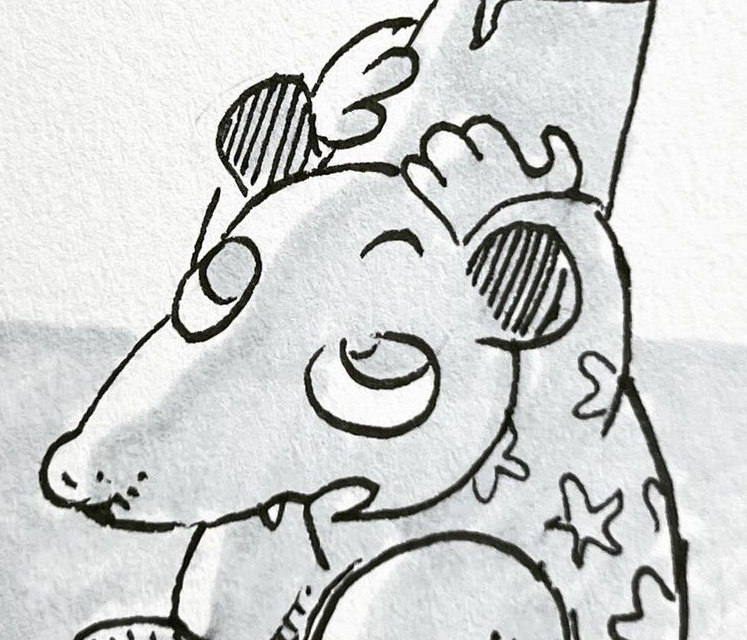
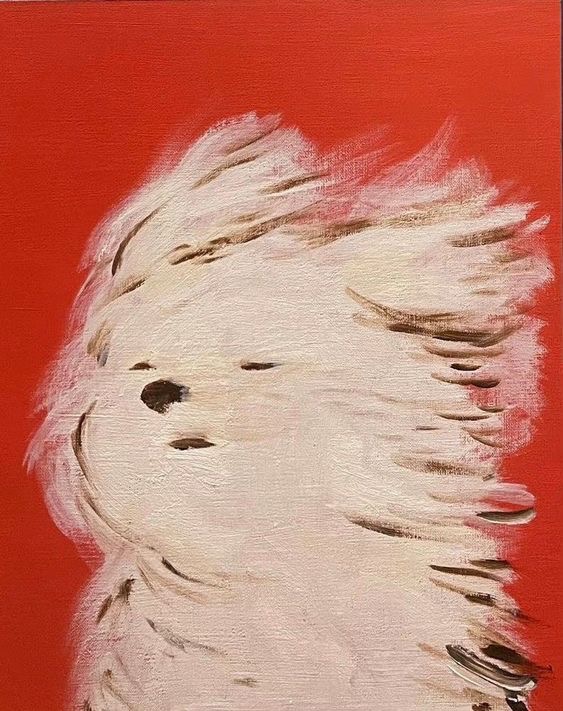
I thought it was one person doing all the work, rather than 3 separate people. The first two having the same clothes except the hat, same hair, close enough skin color, and the art styling being so simplistic, combined with any differences just thought of as “AI” generating images doing that. After your comment I realized that wasn’t it.
ⓘ This user is suspected of being a cat. Please report any suspicious behavior.
Yea it’s a limitation from trying to force AI image generation into an argument.
Yeah, as an infographic, it obscures the capitalist
Owning your own means of production you use to do your own work is not capitalist in the first place, it’s just work. A plumber isn’t a capitalist for owning his wrench.
the capitalists aren’t even in the picture and they sell the looms and sewing machines and they own the land the shepard rents to raise the sheep.
Owning your own instruments of labor is petite bourgeois. It’s labor, but labor that isn’t exploited by a capitalist, and in this fashion the class character of the petite bourgeoisie is more individualist than the collectivist proletarian on average.
Owning your own instruments of labor is petite bourgeois.
Can I query this a bit more? It seems a bit broad a distinction
I don’t see a tradie who owns his own toolset, but still is dispatched out to worksites for a larger construction company as a petty bourgeois. Nor do I see the WFH copywriter who uses their own laptop for a salaried job as petty bourgeois.
The way I see it here is that they own their own tools but this is a push of the equipment costs back on the employee. The employee cannot simply repurpose those tools to start generating their own income (they can’t work a whole job site on their own, they can’t develop a complete retail website on their own). They are still exploited by capital

The petite bourgeoisie is a more nebulous class. In the example above, with the farmer, this appears to be the classic petite bourgeois farmer that sells commodities they directly produce with their own tools. Thus, my broad simplification does apply to the example, but of course each case has to be analyzed in and of itself.
For the WFH’er, the laptop is technically an instrument of labor, but there’s 0 independence from their employer on this basis, and laptops are an assumed societal guarantee (even if they aren’t provided by society at large) in a similar way phones are. Think shoes, clothes, etc, all used for labor but not considered capital employed by capitalists.
For the trade worker, it depends on the degree of independence. An independent tradie that sometimes works with larger orgs is petite bourgeois firmly, but one that exclusively works with the larger firm and is employed by them regularly straddles the line between proletarian and petite bourgeoisie. You described very well how the bourgeoisie often takes advantage of the petite bourgeoisie and pushes them towards proletarianization, but the fact that they own the instruments of their labor gives them independence and a better ability to stand on their own, an advantage over workers that only have their labor-power to sell.
The petitie bourgeoisie is unique in that it is caught between aspirations of independence, and the increasing pressured towards proletarianization. It is a class that exists between two classes and constantly is pushed towards the proletariat by bigger business. That’s why independence is such an important factor in their class outlook, and the biggest, most general characteristic is that they both labor and own the instruments of labor, not whether they employ others or not.
I see, thank you as always for your clear and detailed explanations. You’re a true gem.
No problem! You asked a great question, and I’ve seen discussions surrounding artisinal and trade labor more frequently recently so it’s been on my mind. Thanks!
not whether they employ others or not
That’s certainly a take. I feel like you’re conflating artisans and petty boug here. Could you point me to where I can read more?
Artisans are a sub-category of the petite bourgeoisie. They sell commodities they fashion, not their labor power for a wage or piece-wage, and those that do are not true artisans in the class sense, but the character of labor, and thus are proletarian artisans rather than traditional artisans.
Prolewiki’s articles on the Petite Bourgeoisie and Artisans backs this up:
The petite bourgeoisie or petty bourgeoisie is the lower strata of the bourgeoisie, consisting of smaller-scale merchants, semi-autonomous peasants, small business owners, self-employed individuals with complete autonomy, and other business owners who own enough means of production to extract surplus value but not wealthy enough to subsist solely off that extraction, in contrast to the haute bourgeoisie. Therefore, they must also perform labour alongside their employees.
This coincides with the class outlook of self-employed people, who seek individual autonomy over collective bargaining (on average), whereas proletarian workers tend to come to the class outlook seeking collectivization. Artisinal reaction was covered by Marx. Independent artists struggle against proletarianization in a similar way to small business owners and other self-employed individuals. They can also be allied with the proletariat, due to their precarious social position.
Of all the classes that stand face to face with the bourgeoisie today, the proletariat alone is a really revolutionary class. The other classes decay and finally disappear in the face of Modern Industry; the proletariat is its special and essential product.
The lower middle class, the small manufacturer, the shopkeeper, the artisan, the peasant, all these fight against the bourgeoisie, to save from extinction their existence as fractions of the middle class. They are therefore not revolutionary, but conservative. Nay more, they are reactionary, for they try to roll back the wheel of history. If by chance, they are revolutionary, they are only so in view of their impending transfer into the proletariat; they thus defend not their present, but their future interests, they desert their own standpoint to place themselves at that of the proletariat.
So you agree they aren’t capitalists then.
You are correct, but we need to pick our battles and know our true enemies and, much like workers aren’t all the same, neither are these people. Us arguing against someone owning a sewing machine to make clothes, or tools to do plumbing, or what have you, is not going to be helpful to the movement. Again, the capitalists aren’t pictured at all in the shitty meme.
Sort of. The petite bourgeoisie strives for independence, rather than collectivization, under normal conditions. This is why they often resist socialization, and can be reactionary. Their distinction from the proletariat requires that we treat them in their own distinct way, but we can ally with them just like we can ally with the peasantry. A failure to correctly handle the petite bourgeoisie allows fascism to fester, as the class that becomes most reactionary in crisis is the petite bourgeoisie as they risk being cast into the proletariat.
The bourgeoisie proper is the enemy, but just like how the proletariat can ally with the peasantry and petite bourgeoisie, so too can the bourgeoisie manipulate the petite bourgeoisie towards their own ends.
Yeah ok except the worker in these infographics is getting a cut of the profits of every sale.
#1 has no capitalist
#2 worker makes 66% of the profit per sale while capitalist makes 33%
#3 Same as 2
If they want to make a 66% cut of profits per sale the minimum wage in capitalism we can roll with that.