

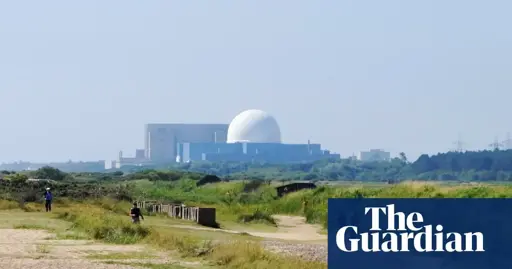
The motion, adopted at conference, removes a “blanket opposition to nuclear fission” and instead commits the Green party of England and Wales to assessing nuclear projects alongside other low-carbon technologies.
Its electricity generation policy still prioritises offshore wind, onshore wind and rooftop solar as the primary sources of electricity, but allows elected representatives to support new nuclear reactors on a case-by-case basis.
This was one or the few areas I didn’t align with the Green Party before, as I believe that a bit of nuclear is kind of necessary to help round out less consistent energy sources as things stand. I think this is a reasonable stance.
It’s radioactive before you dig it up, and it’s radioactive after. The difference now is that we have the tech to keep using it as fuel after it’s “done”.
It is far, far more radioactive afterward.
After fuel has been in-pile for a full lifetime, it has fissioned, decayed and transmuted to the point where half the periodic table worth of radioactive isotopes have been produced and are all present in the same waste
I mean, it’s called enriched uranium for a reason. 😅
So it’s ok to handle radioactive waste… with a shovel?
The vast majority of the process is automated. I used to work with a guy who designed and tested nuclear plant automation. Makes Satisfactory look like stacking wood blocks.