
cross-posted from: https://lemmy.world/post/54257492
Hiya. I live in Southern California. We have a few bats I notice doing their thing in the evenings. I wanted to help them out, encourage more - we have a home where all sides are perfect for bat houses (height/clearance wise) But I realized we have an owl (or maybe 2) that is also a frequent visitor in our neighborhood in the late summer/autumn. Am I just setting up a danger buffet?
Can we help @JupiterSnarl@lemmy.world create a bat sanctuary?
You must log in or register to comment.
A great question! Always a good start to determine if we’re doing more harm or good when we try to help out.
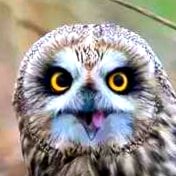
Owls most certainly do eat bats. Owls will eat anything though, so when offered a diverse amount of prey, how much realistically are we looking at offering up bats on a platter?
The good news is: not likely very much. While it looks like owls are the top predator of bats in most cases (around 10-40% of bats killed were killed by owls, but that number varies greatly by how broad or specific a region we are looking at), bats will still only make up <1% of an owl’s diet, and that is usually much closer to 0 than to 1%. Owls can and will catch prey on the wing, but they are not really built for speed and agility and do much more ambush hunting. They wouldn’t need to be adapted to silent flight and stealth if they could just chase down prey outright like a hawk would. If other types of prey are scarce and there is a bat roost nearby, then the owl will up its take of bats out of necessity.
For anyone interested in more detail, I found a couple of short and interesting papers on owl predation of bats.
Bats do not Alter their Foraging Activity in Response to Owl Calls
Fake predator figures were placed outside of bat roosts and owl sounds were played to see if either had an effect on bat activity. No statistical difference was found from an equal increase of generic outdoor background noise.
A look at the numbers of Eurasian bat species eaten by various owl species. Good for showing what species are more likely to catch bats. Confirms owls aren’t really built for catching bats and that it’s likely only a good opportunity as they are coming out of their roost or heading back in.
This was the most interesting paper I found, studying Tawny Owl (Europe’s version of our Barred Owls). The summary and conclusion alone has a lot of great info. I just read these sections and skimmed the rest for now, since this one is a little longer, but I’m going to go read it in full after I post this because it seemed a very good paper!
Summary
To study the link between owl predation and anti-predator behaviour in bats, we evaluated seven months of video recordings at roosts and the behaviour of 51 passive integrated transponder (PIT)-tagged bats and bats without tags in a geographically isolated colony of greater noctule bats (Nyctalus lasiopterus) in Spain. We found the tawny owl Strix aluco to almost continuously hunt N. lasiopterus, from perches and on the wing, well after the bats emerged at dusk and when they returned to their roosts. We recorded 39 unsuccessful and three successful attacks. Nonetheless, we found no evidence that owl predation modifies bat behaviour. While the bats constituted only a very small proportion of the owls’ diet, owl predation accounted for an estimated 30–40% of bat mortality, which may have a significant impact on small, local or isolated bat populations, in particular, and thereby shape regional bat distributions. We hypothesize that low roost availability may also affect the bats’ potential response to predation, which could lead to natural predation having an excessive impact on bat populations.
Conclusion
We did not find any clear indication that owl predation triggers roost-switching or delayed emergence from roosts as an anti-predator behaviour in N. lasiopterus. It remains unclear whether the bats were unable to detect predators and perceive the predation risk, or whether other factors, such as low roost availability obliged the bats to remain in their roosts despite the predation risk. Although our observations confirm previous findings that bats are of minor importance in the diet of owls, we show a major impact of owl predation on the study colony of N. lasiopterus.
(I’m leaving out a bit here, as this species of bat was being looked at because it is endangered and has a fragmented population. The conclusions here about bats having a significant local impact on bat populations is very valid and something that should be considered, but since in this post I’m speaking in more generalist terms, I feel this makes it sound more significant in making owls sound more dangerous to bats than I think is applicable to the person asking the question this post is about.)
We propose that a low roost availability may prevent bats from switching roosts to escape predation, and make their movements more predictable, which in turn may increase the predators’ predation success.
So, what is my advice to OP?
I think this is very complimentary to some bat house advice I picked up this year when I got discussing various animal houses at our clinic’s open house event: more bats houses will typically give you more odds of success of successfully hosting bat colonies.
The thing I honed in on when preparing to host that discussion was that bats like to have multiple roosting sites available for a number of reasons. The primary one I learned about was heat regulation. Bat houses should be sealed up tightly to maintain a stable temperature. This is done by several means, having houses that face different directions, are in differing locations (say, one on the house, one on a pole in the yard), and/or are painted different colors. (If you are putting up bat houses, do check recommended direction and colors for your local climate! You don’t want cooked or frozen bats!)
This also seems to be a key item in the conclusion of that last predation paper. Owls aren’t very bright, and by having multiple places to go hide and sleep, they have a better chance of the owl staking out the wrong roost. Having multiple shelter options will keep the bats safer from predators and the local environment.
Finally, here are some links you may find helpful in selecting/building and placing a bat house to have your best chances of success that I gathered for my talk.
Way more about bat houses than you probably ever care to know.
Bat Conservation Intl Guide to Bat Houses
Six bat house safety principles to keep in mind, and many more links to more specific topics.
One page guide from Merlin Tuttle, bat expert, and primary author of that Bat House Builder’s Handbook.
I hope that was helpful! Any more questions, just let me know! 🦉 ❤️ 🦇