Seriously. Every form of entertainment has baked-in political assumptions, and that definitely includes #ttrpg . You might choose not to examine them, but this is an active choice on your part, and you don’t get to pretend that your entertainment is “free of politics”.
Do the world and yourself a favor, and use this template instead.

Done. Thanks for the suggestion!
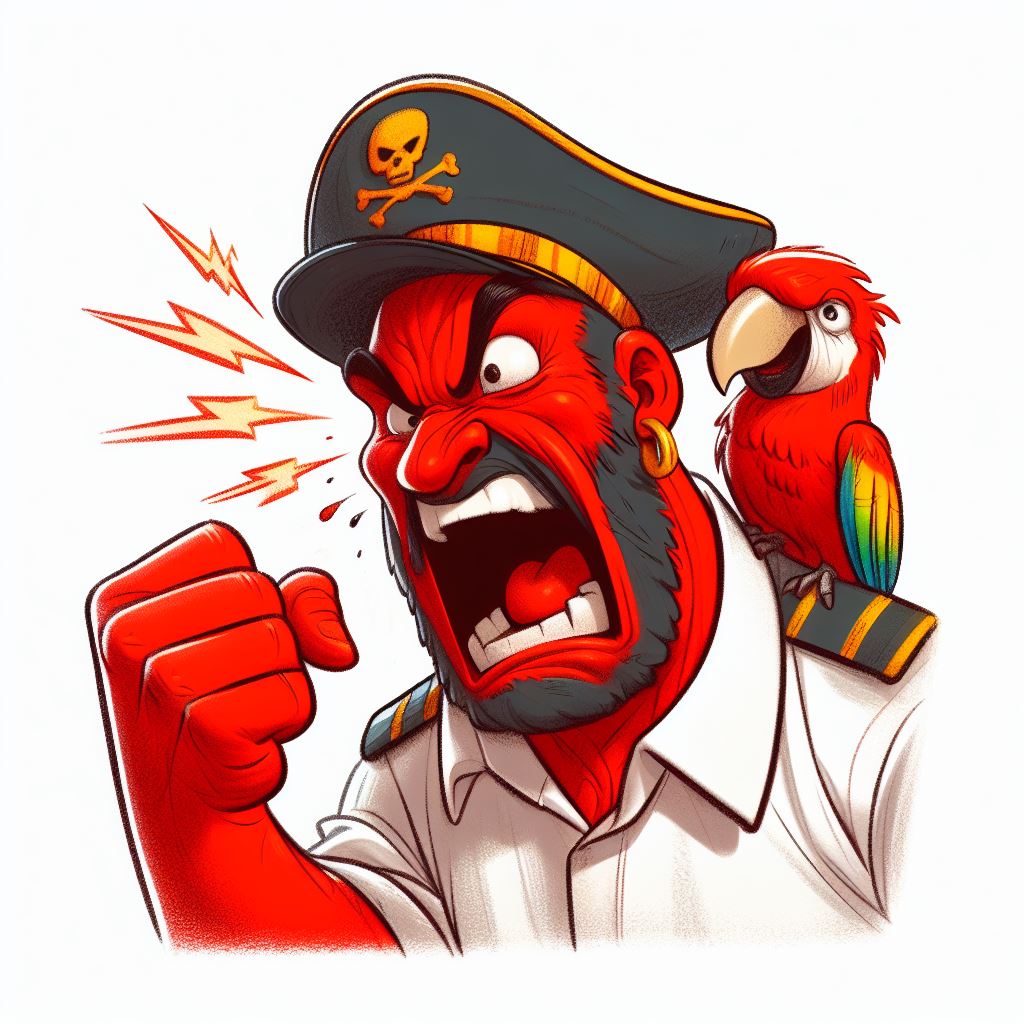
What template was he using before?
Steven Crowder
This douchebag isn’t exactly the most appropriate for this meme.*First draft was the op crowder meme. Good on op for updating it.
He changed it to Calvin, but this comment is hilarious now.
Now it’s like…

Deleted by creator
This template really needs to die.
Edit: this was meant for the Crowder template. Calvin is cool.
Your comment now serms hilariously hostile after the edit.
I came here after the edit and got scared that Watterson did something.
This comment is really funny now that OP is using the new format, please leave it up.
Hah, gotta edit it at least a bit. I’ll leave the original viewable.
“I don’t want to talk about/see politics” is always synonym to “I support the status quo, and I will aggressively reject anything that goes against it”.
Nothing that happens on a public space is free of politics, even when it’s not controversial.
Just MLK’s white moderate doing white moderate things. Funny how shit don’t change.
I don’t like politics in ttrpgs because that means less time SMITING and more time with boring words. Unless the politicians are secretly vampires, then I can keep SMITING.
NO TALK ONLY SMITE.
This post has been brought to you by the palabian gang.
Now with the vampire politicians gone you can help shape the new government of the city
Anything they see in there that goes against their own personally DESIRED to be status quo is an insult. Theyve just got shit views so well rounded culture shocks them and it reminds them all about how their shit stinks and they aren’t really all that smart or morally sound. Cause if they were, they wouldn’t have identified with any that stuff to begin with or realized the perils.
And it makes them know the cringe at how they’re viewed (but they say its just how they’re PORTRAYED to pass the buck on being that way being their own fault and indicative of their lack of stats and general lack of character) 😄😂
You can tell what someone’s politics are by what they consider political.
I was astonished at some of the Steam reviews of Outer Worlds after playing it. People proper pissed off that their experience had been ruined because there’s a female side character with an optional side quest where she wants a date with another woman. Like how thoroughly filled with hate do you have to be as a person, to be fine with all the mass killing but suddenly get a moralistic high horse about a fictional character going on a dinner date you don’t approve of.
Sad that Steam are making a comment of their own by allowing those reviews to stay up.
Steam definitely has a libertarian streak, seemingly. I wish I had started switching over to GOG a lot sooner.
How DARE you make your game try to reflect reality.
While I haven’t read those reviews, I think the implications of Steam removing reviews would be worse, since they would effectively be manipulating the user score of a game. User reviews are just that, user reviews. The score should indicate what users think, whatever their reasons may be for thinking it, no?
I don’t disagree with the rest of what you said though.
EVERYTHING is politics and the shitheads who complain are the ones who made it that way.
People do not all have the same working definition of “politics”. Many people seem to use it to mean “overt content about contemporary issues”, but that’s not really a good definition.
If your game has sentient creatures with agency and desires, it has politics.
For example, if your game has a king, there’s politics. Having the people accept monarchy is a political statement. It’s not as hot-button as, say, having slavery, but it’s still political.
You might not be surprised if your players react to a world with chattel slavery by trying to free the slaves and end that institution. The same mechanism may lead them to want to end absolute monarchy. They see something in the setting they perceive as unjust, and want to change it.
A lot of people are kind of… uncritical, about many things. They don’t see absolute monarchy as “political” because it’s a familiar story trope. They are happy to accept this uncritically so they can get to the fun part where you get a quest to slay the dragon. (Note that the target of killing the dragon rather than, say, negotiating or rehoming it is also political)
People then get frustrated because they feel stupid, and they’re being blocked from pursuing the content they want. They just want to, for example, do a tactical mini game about fighting a big monster that spits fire. They don’t want to talk about the merits of absolute monarchy or slaying sentient creatures.
It’s okay to not always want to engage in the political dimension. That doesn’t mean it’s not there. If someone responds to the king giving you a quest with “wait, this is an absolute monarchy where the first born son becomes king? That’s fucked up” they’re not “making it political”. It already was political.
If you present a man and a woman as monogamously married in your game, that’s political. That’s a statement. If you show a big queer polycule, that’s also a statement. The latter will ping the aforementioned uncritical players as “political”, because it’s more atypical, but both are “political”.
Some of this can be handled in session 0. But sometimes you learn that some people in the group have different tastes and probably shouldn’t play together.
Same people who complain about Nazis being the enemy in Wolfenstein
EVERYTHING is politics. It absolutely affects every aspect of life, ESPECIALLY fascism
that’s not politics. That’s just normal people getting offended at things. It’s normal because it’s not possible to please everyone at once so there will always be someone.
I feel like a lot of people, who complain about politics in gaming are not choosing to examine/not examine the political assumptions, they are simply not realising that they’re there. Often these themes reside deeper in the storytelling so you have to actually engage with it to be aware of them. People who complain about it only choose a handful of topics to be mad about, because they are against it.
No. Their politics is being default to the point they can completely avoid self awareness.
Exactly. What they’re really mad about is the fact that there’s a black person, a gay person, or woman with normal sized tits in the game.
I hate normal sized tits!
/s Just in case 😄
normal sized tits are such a rarity
That may be the case for some people, but a lot of people just want some good lighthearted fun without any of the real world implications attached to it. This obviously doesn’t excuse bigoted mindsets. I’m talking about campaigns where me and my players just want to do some good old goblin slaying without the need for anyone to chime in with a “UM actshually those goblins have families too”.
Aren’t goblins ontologically evil in most DND settings? That should take care of that specific issue anyway.
Nah, they’ve long fallen to the usual cycle of “here is a species of interesting antagonistic creatures” -> “Oh wow, that sounds interesting. I want to play them” -> “Yeah sure, here’s a playbale variant of that species. We’ve removed all traces of evilness and uniqueness because god forbid players playing evil characters”. Same as Drow, Orcs, Fairies and Goliath.
It’s not just their inherent evil nature BTW. It’s also stuff like daylight sensitivity.
I mean I can understand having occasional exceptions to the rule so the players can get an interesting non standard experience, but straight evil aligned critters should always be present in fantasy settings especially ttrpg and DND specifically.
I’m not sure about always. That’s just lazy world building to have orcs naturally evil instead of predominantly mind controlled or ruled by evil leaders or some sort of blood fued. It’s the same with good aligned races. Unless you want to focus on the definition of good and evil.
Easy moral patch: These specific goblins have all made unambiguously evil choices that warrant a good slaying. Like kicking dogs. You’re not slaying goblins because they’re goblins, you’re slaying dog-kickers that happen to be goblins. There are plenty of goblins who do not kick dogs, but they’re not a part of this fight.
This is still a political statement that dog kickers are evil. I doubt anyone would mind that, and those that do are better off leaving my table anyway.
Or, you know. We could just ignore those pseudo-moral excuses and do some good old goblin slaying because they’re in the dungeon, laying traps and we want the loot. Not everything needs 12 layers of logical depth. Sure, it’s fun to explore moral implications from time to time, but more often than not, no one cares.
But you’re making the statement that it’s okay to kill people if you want their stuff. The politics are there even if you don’t choose to examine them.
No, I’m not. Because my mental development moved past three years old and I’m able to differentiate reality from fiction. Do you also believe that Super Mario players advocate for animal cruelty towards turtles?
Have you taken any literature or maybe other media classes at the 200 level?
Sometimes people say really weird things and I wonder if they just don’t know any better. Maybe they’re a teenager.
But like “fact from fiction” is irrelevant here. No one’s saying Dracula is non-fiction, but you can still read it and take meaning from the text. Furthermore, it’s not just a story about a guy who bites people. The read on how women are expected to behave is pretty obvious, for example.
You don’t have to care about the subtext of “kill all the goblins and take their stuff”, but saying there is no subtext or “no one cares” is absurd and self-centered.
That’s an interesting point you make and I partly agree. There are certain undertones and sometimes you can create a better story by engaging these undertones and creating a monster in noble clothing and a metaphor for the societal corset women are forced ro wear.
But other times I just want to enjoy a trash movie or 15$ airport library book. And the undertones there are purely accidental and shouldn’t be taken too seriously.
Both forms of entertainment serve their purpose and you can insist on pointing out the political statements and societal undertones in a cheap slasher movie. but that doesn’t make you smart or enlightened. It just makes you an ass who enjoys shitting on other people’s lighthearted entertainment.
And one last note: “‘fact from fiction’ is irrelevant here”. No, it’s not. If someone accuses me of encouraging mindless slaughter of people based on some regular dungeon crawling, then it does matter. Because that’s exactly the idiotic killer games argument of the early 2000s that has been disproved 100s of times! Killing goblins in a ttrpg has absolutely nothing to do with any moral standpoints I hold outside of the game and only an idiot would believe otherwise!
I mean the statement is being made within the universe. Super Mario does advocate for violence against koopas. You don’t have to examine it, but that doesn’t make it apolitical.
All I want is more nice unpolitical games like Bioshock or Wolfenstein
And not the woke nonsense of having female or PoC main characters.
I don’t care about politics in my games (and shows/movies) as long as it fits into the world and into the story. A TV show examples for that is Torchwood. It has to be the most gay scify show (at least it is the most gay I know) but all of it fits together and I love the show, even as a totaly hetero/cis guy. It doesn’t feel forced but is just how everything just it. Not sure if I can explain it good, hope it is somewhat to understand.
I learned after the fact, that most of Torchwood is just how John Barrowman is. He insisted on having a scene with a shirtless Stephen Amell in Arrow as well.
Maybe that why it feels so “real” and “authentic” and not just forced onto the story.
I haven’t actually seen Torchwood, but I am skeptical that it could possibly be gayer than my beloved Sense8.
I do like that era of Doctor Who though, so maybe I should check this out for myself…
“Politics are genuinely fun and everyone wants to see them all the time, and the people who say they don’t want to see it like it even more, they just wish they were seeing different politics.” -hbomberguy
Feels kind of ironic using Chowder for this meme, but I agree with the message :P
“I don’t want politics in my gaming” = “I stopped growing, emotionally, the first time I saw Jugga in Conker’s Bad Fur Day”
It means “I don’t believe in anything and my media must reflect the status quo of (my) politics or I will throw a little baby tantrum because you dared to make me think about the cost of the comfort I enjoy”
I disagree, because typically it means someone is racist or sexist and just doesn’t want to see people of color or queer characters. Such people may still be willing to engage with the political aspects of their gaming insofar as they may join initiatives like Stop Killing Games or argue that game devs should be treated better, but they’re just bigoted assholes who can’t handle people of color or queer characters.
Also don’t mistake this as a defense of them. They’re deplorable. I’m just saying I don’t agree with the statement as written.